
Home > Stainless Steel > Stainless Steel 430Ti Pipe
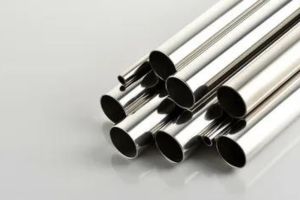
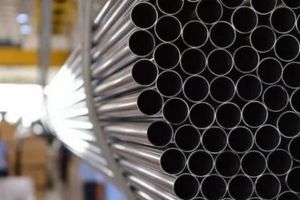
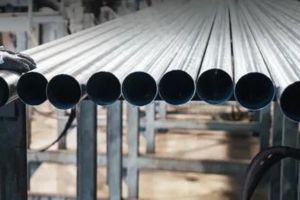
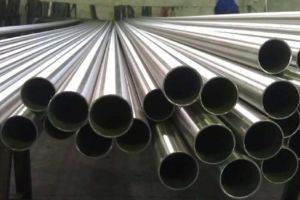
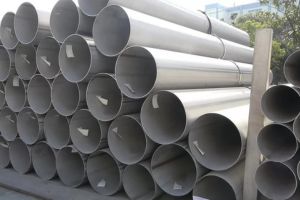
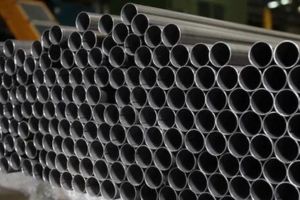
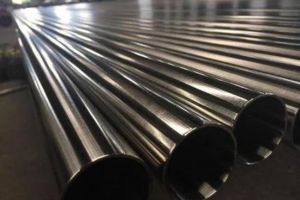
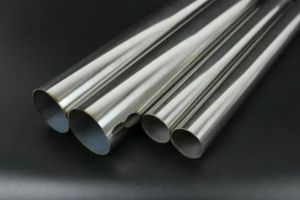
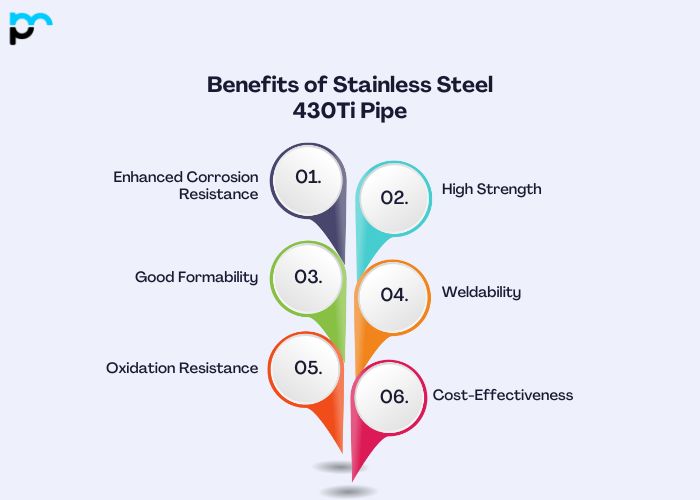
Stainless Steel 430Ti Pipesare a variety of ferritic stainless steel alloy that contains titanium, which improves its mechanical properties and resistance to corrosion. This alloy provides good formability, weldability, and resistance to oxidation, which makes it appropriate for a range of industrial uses like automotive exhaust systems, heat exchangers, and architectural components. Stainless steel 430Ti pipes are recognized for their durability, ease of fabrication, and cost-effectiveness in corrosive settings.
| Specifications | ASTM A/ASME SA268/A731 CL |
| Dimensions | ASTM, ASME and API |
| Schedule | SCH20, SCH30, SCH40, STD, SCH80, XS, SCH60, SCH80, SCH120, SCH140, SCH160, XXS |
| Wall Thickness | Sch 5s, 10s, 40s, 80s, 160, XXS |
| Size – Seamless 430Ti Pipes | 1/2″NB – 24″NB |
| ERW 430Ti Pipes | 1/2″ NB – 24″ NB |
| EFW 430Ti Pipes | 6″ NB – 100″ NB |
| Form | Round, Square, Rectangular, Hydraulic Etc |
| Types | Seamless / ERW / Welded / Fabricated / LSAW Pipes |
| End | Plain End, Beveled End, Treaded |
| Length | Single Random, Double Random & Cut Length. (Custom Sizes Available as per customers requirement) |
| STANDARD | WERKSTOFF NR. | UNS | JIS | AFNOR | BS | KS | EN |
| SS 430ti | 1.4510 | S43036 | – | – | – | – | – |
| Grade | C | Mn | Si | P | S | Cr | MO | Ni | CU | |
| 430ti | Min | – | – | – | – | – | 12.0 | – | – | – |
| max | 0.15 | 1.00 | 1.00 | 0.04 | 0.03 | 14.0 | – | – | – | |
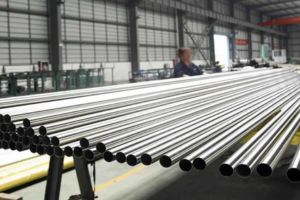
At Koasteel, we take pride in being the largest supplier and manufacturer in the New Zealand, delivering innovative solutions for all your piping requirements. With advanced production facilities strategically situated in the New Zealand, we maintain an extensive inventory of more than 25,000 tons of top-quality materials kept ready in stock.
Reach out to us for a fast quote tailored to your requirement.
We supply these Stainless Steel 430Ti Pipe conforming to DIN, ISO, JIS or ANSI Standard.
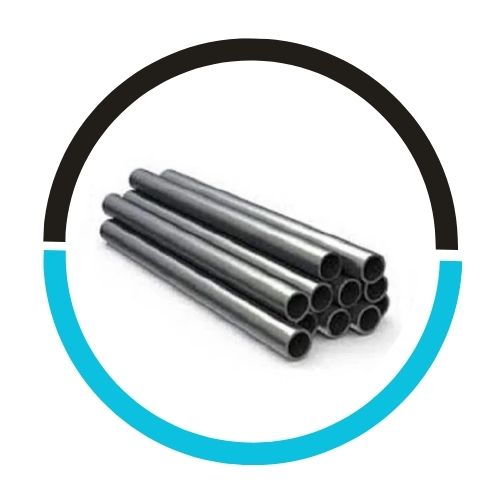
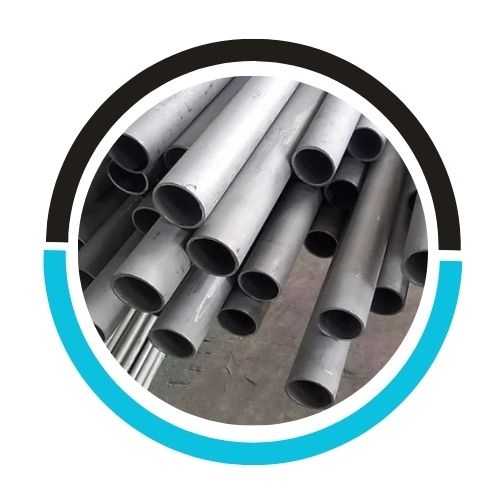
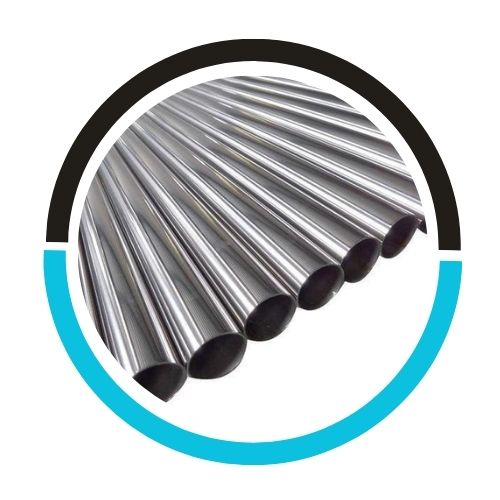
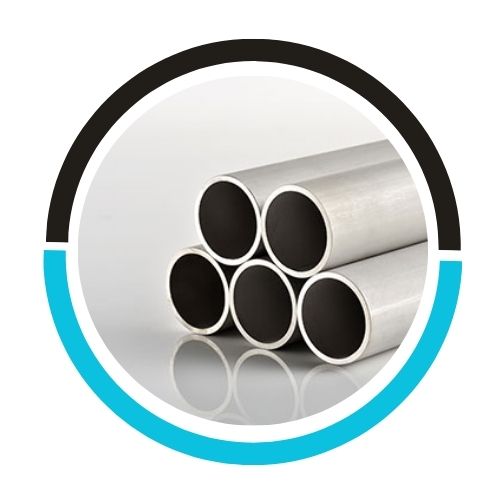
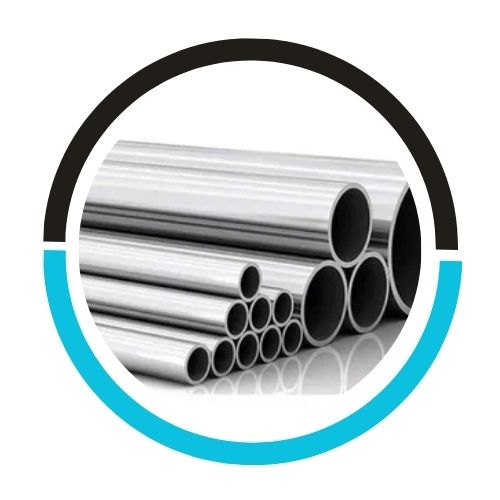
Stainless Steel 430Ti Pipe uses are as varied as the sectors they support, led mainly by the aerospace, railway, construction and automotive sectors along with petrochemical, nuclear, medical, Oil & Gas, Chemical, Pharmaceutical, Food & Beverage, Nuclear, Thermal Power plants, Paper and Pulp, marine and mining, etc.
Assess Corrosion Resistance Needs: Identify how much corrosion resistance your application demands, taking into account elements like the surrounding environment, contact with corrosive materials, and the conditions under which it operates.
Evaluate High-Temperature Performance: Check whether your application deals with high temperatures, since stainless steel 430Ti pipes provide solid resistance to heat. Confirm that they suit the maximum operating temperature.
Consider Mechanical Properties: Review the mechanical characteristics your application calls for, including strength, ductility, and toughness, so the selected stainless steel 430Ti pipes can handle the necessary loads and stresses.
Check Formability and Fabrication Requirements: Think about the formability and fabrication demands of your project. Stainless steel 430Ti pipes are generally simple to fabricate, but if intricate shapes or narrow tolerances are needed, confirm that the material can be shaped accordingly.
Review Regulatory Compliance: Make certain that the stainless steel 430Ti pipes conform to applicable industry standards and specifications, like ASTM or ASME, to guarantee quality and regulatory compliance for your application.
Assess Supplier Reputation: Select a trustworthy supplier known for delivering high-quality stainless steel products and dependable customer service. Confirm that the supplier can satisfy your particular needs and offer continued support.
Stainless Steel 430Ti pipesare resistant to corrosion in most environments thanks to their chromium content, which creates a protective oxide layer on the surface. Nevertheless, they can still corrode under extreme conditions or extended contact with corrosive materials. Routine upkeep, including cleaning and steering clear of harsh chemicals, can help stop rust from forming and maintain the integrity of stainless steel 430Ti pipes.
YesStainless steel 430Ti pipes can be joined through standard welding methods including TIG (tungsten inert gas) welding, MIG (metal inert gas) welding, and SMAW (shielded metal arc welding). That said, preheating and post-weld heat treatment might be required to reduce the chance of cracking and safeguard the soundness of the weld joint. Furthermore, selecting appropriate filler materials and welding settings is essential for preserving corrosion resistance and mechanical properties. In summary, correct welding procedures and safeguards must be observed to produce strong and long-lasting welds in stainless steel 430Ti pipes.
Stainless steel 430Ti pipes are typically not advised for natural gas service because they offer weaker corrosion resistance than other stainless steel grades made specifically for such uses, like 304 or 316. Natural gas holds sulfur compounds and moisture that can cause corrosion as time passes, particularly where humidity is high or acidic conditions exist. It’s wise to refer to industry standards and regulations to confirm the correct material choice for natural gas applications, ensuring both safety and durability.
Stainless steel 430Ti pipes typically don’t need corrosion protection coatings because of their built-in resistance to corrosion. That said, in settings involving harsh chemicals or elevated humidity, using corrosion-resistant coatings can offer extra defense against corrosion and lengthen the pipes’ service life. It’s important to evaluate the particular environmental conditions and seek advice from corrosion protection specialists to decide whether coatings are needed for your application. Routine maintenance and cleaning can likewise help prevent corrosion and maintain the integrity of stainless steel 430Ti pipes over time.
Email: sales@koasteel.nz