
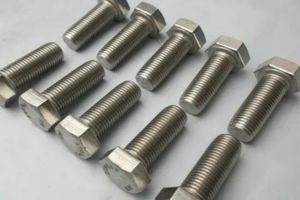
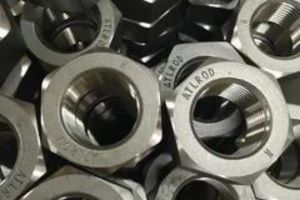
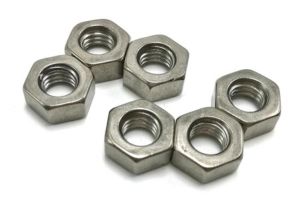
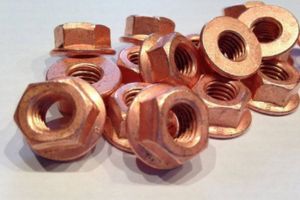
Set out on a path toward unrivaled performance with our Titanium Bolts, prominently featured on our product pages. We provide a broad selection of top-tier solutions carefully designed to satisfy a variety of industrial needs. Enter a world of adaptability and dependability with our carefully engineered products built for a wide range of industrial uses. Our products feature precisely developed designs that comply with rigorous industry standards, highlighting durability, lightweight build, and the outstanding corrosion resistance natural to titanium. As a dependable supplier, customer satisfaction stands as our foremost priority, demonstrated through our adaptable choices, competitive pricing, and accelerated delivery services. Whether in aerospace, automotive, or marine sectors, our titanium bolts represent excellence and innovation, providing unrivaled performance. Our steadfast dedication to perfection strengthens your business with reliable solutions, ensuring success and confidence in every transaction.
| Specifications | ASTM B 348 ASME SB 348 |
|---|---|
| Standard | DIN, ASTM, BS and all International Standards |
| Length | 3 mm to Gr 2 mm |
| Size | M3 – M56 | 3/6″ to 2″ | Custom Sizes |
| Type | Hex Head Bolts, Square Bolts, U bolts, Eye bolts, T bolt, Hex Bolt, Lag Bolts, Counter sunk Bolts, Hex Head nuts, Square nuts, Lock nuts, Eye nuts, wing nuts, T nuts, Panel Nuts, Coupling Nuts, Dome nuts, Acorn Nuts. |
| Density | Melting Point | Yield Strength (0.2%Offset) | Tensile Strength | Elongation |
|---|---|---|---|---|
| 4.5 g/cm3 | 1665 °C (3030 °F) | Psi – 39900 , MPa – 275 | Psi – 49900 , MPa – 344 | 20 % |
| Titanium Gr 2 | C | Ti | N | Fe | H | O | V | Al |
|---|---|---|---|---|---|---|---|---|
| 0.1 max | 99.2 min | 0.03 max | 0.3 max | 0.015 max | 0.25 max | – | – |
At Koasteel, we take pride in being the largest supplier and manufacturer in the New Zealand, delivering advanced solutions for every one of your piping requirements. With cutting-edge production facilities strategically situated in the New Zealand, we maintain an extensive inventory of more than 25,000 tons of top-quality materials kept ready in stock.
Reach out to us to receive a fast quote tailored to your requirement.
We provide these Titanium Bolts in accordance with DIN, ISO, JIS or ANSI Standard.
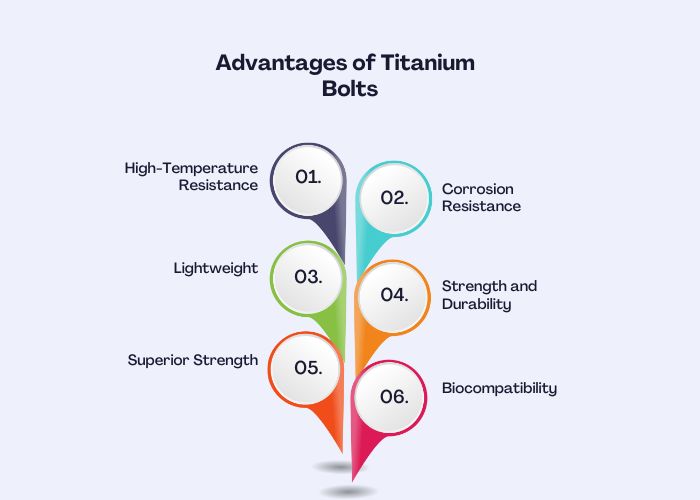
Lightweight: Titanium is recognized for its strength-to-weight ratio. This means titanium bolts are remarkably lightweight when compared to bolts made from steel or other metals. This characteristic is especially valuable in fields where reducing weight matters, such as aeroplanes and race cars.
Corrosion resistance: Titanium is highly resistant to corrosion, even in harsh conditions. This makes titanium bolts perfect for outdoor or marine uses exposed to water, salt water, or chemicals that could cause other metals to rust or corrode as time passes.
Superior Strength: Despite being lightweight, the titanium blades are surprisingly strong. They can endure high tensile and tensile forces, which makes them well-suited for demanding uses that require system integrity.
Biocompatibility: Titanium is biocompatible, meaning it is non-toxic and well-tolerated by the human body. This characteristic makes titanium bolts appropriate for medical implants, such as orthopaedic or dental implants, where they can be used safely without concern over side effects or abscesses.
Nonmagnetic: Titanium is nonmagnetic and can be helpful in certain applications where magnetic interference must be minimized, such as electronics or MRI machines
High-Temperature Resistance: Titanium retains its strength and integrity at high temperatures, making titanium bolts fitting for applications involving high temperatures or temperature cycles
Luxury: Titanium has a distinctive appearance and can be anodized to produce vibrant colours. This visual quality makes titanium bolts favoured in visually demanding applications such as custom cars or high-end bicycle parts.
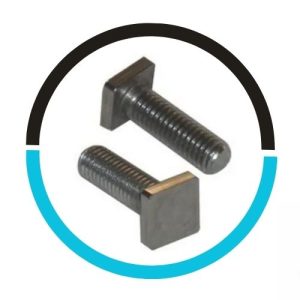
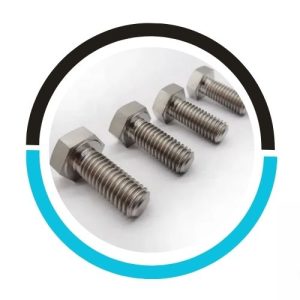
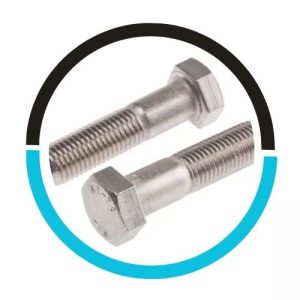
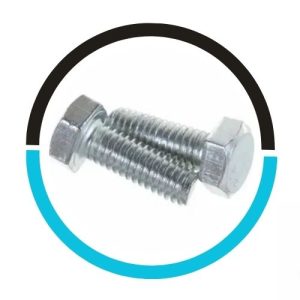
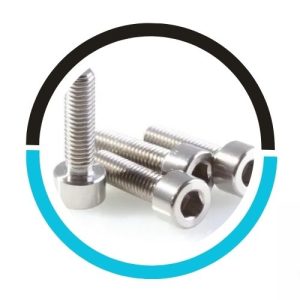
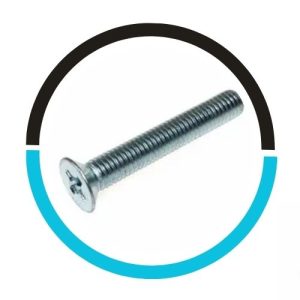
Titanium Bolts have applications as varied as the industries they cater to, propelled mainly by the aerospace, railway, construction and automotive sectors along with petrochemical, nuclear, medical, Oil & Gas, Chemical, Pharmaceutical, Food & Beverage, Nuclear, Thermal Power plants, Paper and Pulp, marine and mining, etc.
Aerospace: Titanium bolts see extensive use in the aerospace sector thanks to their low weight and excellent strength-to-weight ratio. They serve as vital components in aircraft, engines, and other mission-critical systems.
Automotive: Titanium bolts are applied in race cars and high-performance motorcycles that demand weight savings to boost speed and performance. They frequently appear in engine parts, suspension, and exhaust systems.
Marine: Titanium bolts resist corrosion, which makes them well-suited for marine settings where ordinary steel readily corrodes from saltwater contact. They are employed in boat engines, hull structures and other marine gear.
Treatment: Titanium bolts are biocompatible, meaning they can safely be placed within the human body without producing adverse effects. They are used in medical implants like bone plates, screws and dental implants.
Sports Equipment: Titanium bolts appear in a range of sporting goods, such as bicycles, tennis rackets and climbing gear, where lightweight yet durable materials are wanted to enhance performance
Industrial applications: Titanium bolts serve in numerous industrial scenarios that call for corrosion resistance, high strength and lightweight materials. Additional applications include medical devices, offshore platforms and nuclear reactors.
Titanium grades: Titanium bolts are available in several grades, with Grade 5 (Ti-6Al-4V) being the one most widely used across the board thanks to its favorable strength-to-weight ratio and resistance to corrosion, though for particular uses like space or marine environments, a higher grade such as Grade 7 or Grade 12 might be needed.
Strength requirements: Assess the load and stress demands of your application. Various types of titanium bolts differ in tensile strength. Ensure that the bolts you pick can withstand the necessary loads without failing.
Corrosion resistance: Titanium offers excellent corrosion resistance, yet varying properties result in different levels of corrosion resistance. Should your application involve exposure to corrosive conditions like salt water or chemicals, opt for a bolt with greater corrosion resistance.
Things to Consider: A key benefit of titanium wires is how lightweight they are relative to steel wires. When weight matters in your application, titanium bolts can deliver considerable weight savings.
Price: Titanium bolts typically cost more than their steel equivalents. Take your budget limitations into account and weigh the expense against the performance requirements of your application.
Special coatings or treatments: Based on your application, coated bolts or specialized treatments might be needed to guarantee durability or satisfy particular demands such as resistance to high temperatures or managing increased cholesterol.
Supplier Name: Select a well-regarded supplier or manufacturer recognized for quality titanium bolts. Verify adherence to various certifications or standards to confirm the bolts meet industry requirements.
Environment: Take into account the environment where your application functions. Elements like overheating, moisture, and vibration can influence bolt performance. Confirm that the bolts you select suit your intended purpose.
Yes,Titanium bolts can be recycled to a high degree. Because of its strength and its resistance to corrosion, titanium is a prized material for recycling. The recycling procedure works by melting down old titanium bolts to recover the metal so it can be reused across many industries, supporting sustainability and the conservation of resources.
No,Titanium bolts do not exhibit magnetism. Titanium is a non-magnetic metal, which means it will not attract magnets. This characteristic makes titanium bolts well-suited for uses where magnetic interference needs to be prevented, such as in electronic devices or delicate equipment employed in scientific research and aerospace industries.
Yes,Titanium bolts are suitable for use in underground applications. The remarkable corrosion resistance of titanium makes it well-suited for settings with elevated moisture, acidity, or alkalinity, which are frequently found underground. Its strength-to-weight ratio and corrosion resistance provide lasting durability and dependability in underground structures such as tunnels, pipelines, and mining operations.
Yes,Titanium bolts are suitable for structural applications. The metal’s high strength-to-weight ratio, resistance to corrosion, and durability make titanium appropriate for structural purposes across many industries, such as aerospace, automotive, marine, and construction. It provides strength on par with steel while weighing less, making it ideal for cutting down structural mass.
Email: sales@koasteel.nz